

What types of hunts do you offer, and how long are they?
- 10-day hunts for moose and mountain goat
- 14-day hunts for Dall sheep and combination hunts (e.g., moose + goat)
What does a typical hunting day look like?
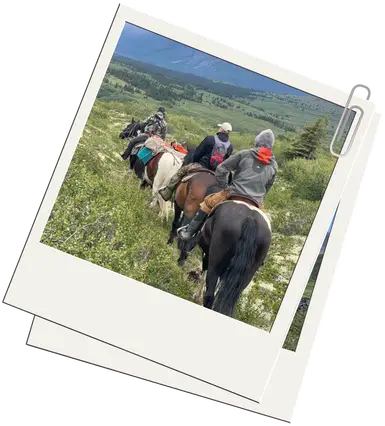
Expect early mornings and full days. You’ll be up around 5–6 am for a hot breakfast. Horses are saddled or packs prepared, and you’re out of camp by 9 am. You’ll spend the day glassing from ridges, traveling by foot or horseback, and covering country until dusk. Return to camp by 6–8 pm for a home-cooked meal or, in alpine backpack camps, a freeze-dried dinner.
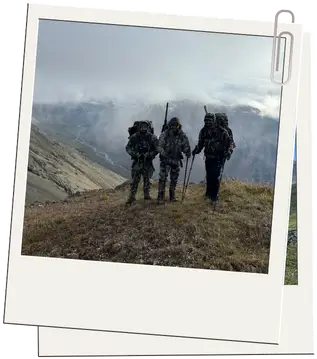
Moose hunts usually use horseback or river travel. Goat and sheep hunts involve significant hiking and glassing in alpine terrain, often backpacking and sleeping in tents.
What are spike camps like?
Depending on the hunt, spike camps may be accessed by airplane, horseback, or jet boat. Camps feature either wall tents or cabins with wood stoves. Alpine hunts involve tents and freeze-dried meals. While remote, all camps are strategically located in prime hunting areas.
Can I take home my meat and trophy?
Yes. You’re encouraged to take your meat home, just bring a cooler or freezer. After the required government inspection, trophies can either be taken with you or shipped via Dakota Taxidermy (North Dakota), which handles all necessary permits and paperwork for U.S. and international hunters.

Where do the hunts start and end?
All hunts begin and end in Whitehorse, Yukon. You’ll need to arrive the day before your hunt and stay overnight in a hotel. A member of our team will pick you up for the 2.5-hour drive to our base camp on the Haines Highway.
Can I drive to base camp instead of flying?
Yes. Driving is an option, and we can provide directions. Driving can make transporting your meat and trophies easier on the return trip.
What’s included in the hunt package?
Your hunt includes:
- A professional guide and wrangler, or packer
- All license fees and taxes
- All meals during the hunt
- Transportation to and from base camp on your scheduled dates
- Air or boat transfers to spike camps as needed
What’s not included?
You are responsible for:
- Hotel accommodations before and after the hunt
- Gratuities (customarily 10–15% of hunt cost, paid at your discretion)
- Non-scheduled shuttle service to or from Whitehorse
- Trophy crating and shipping (handled by Dakota Taxidermy if not transporting it yourself)

What gear should I bring?
We will provide a detailed gear list tailored to your hunt. High-quality boots, layered clothing for changing weather, rain gear, and a reliable rifle are essential. Optics, day packs, and physical readiness are just as important. Goat and sheep hunters should be prepared for high elevation and challenging terrain.
Will I have a chance to check my rifle when I arrive?
Yes. Once you arrive at base camp, you’ll be given the opportunity to shoot your rifle to confirm it hasn’t shifted during travel. This is a mandatory step before heading into the field.
How physically demanding are the hunts?
Moose hunts require long days in the field, expect to ride horses 4-6 hours a day. Goat and sheep hunts are physically demanding backpacking with 40–50 lbs of gear, hiking steep ridgelines, and glassing for hours at a time. Be mentally and physically prepared for extreme weather, long days, and remote conditions. We can accommodate all levels of fitness. Please reach out to plan your dream hunt.
What happens after a successful harvest?
Moose hunts require long days in the field, expect to ride horses 4-6 hours a day. Goat and sheep hunts are physically demanding backpacking with 40–50 lbs of gear, hiking steep ridgelines, and glassing for hours at a time. Be mentally and physically prepared for extreme weather, long days, and remote conditions. We can accommodate all levels of fitness. Please reach out to plan your dream hunt.